Sharing Your Heart and Your Home
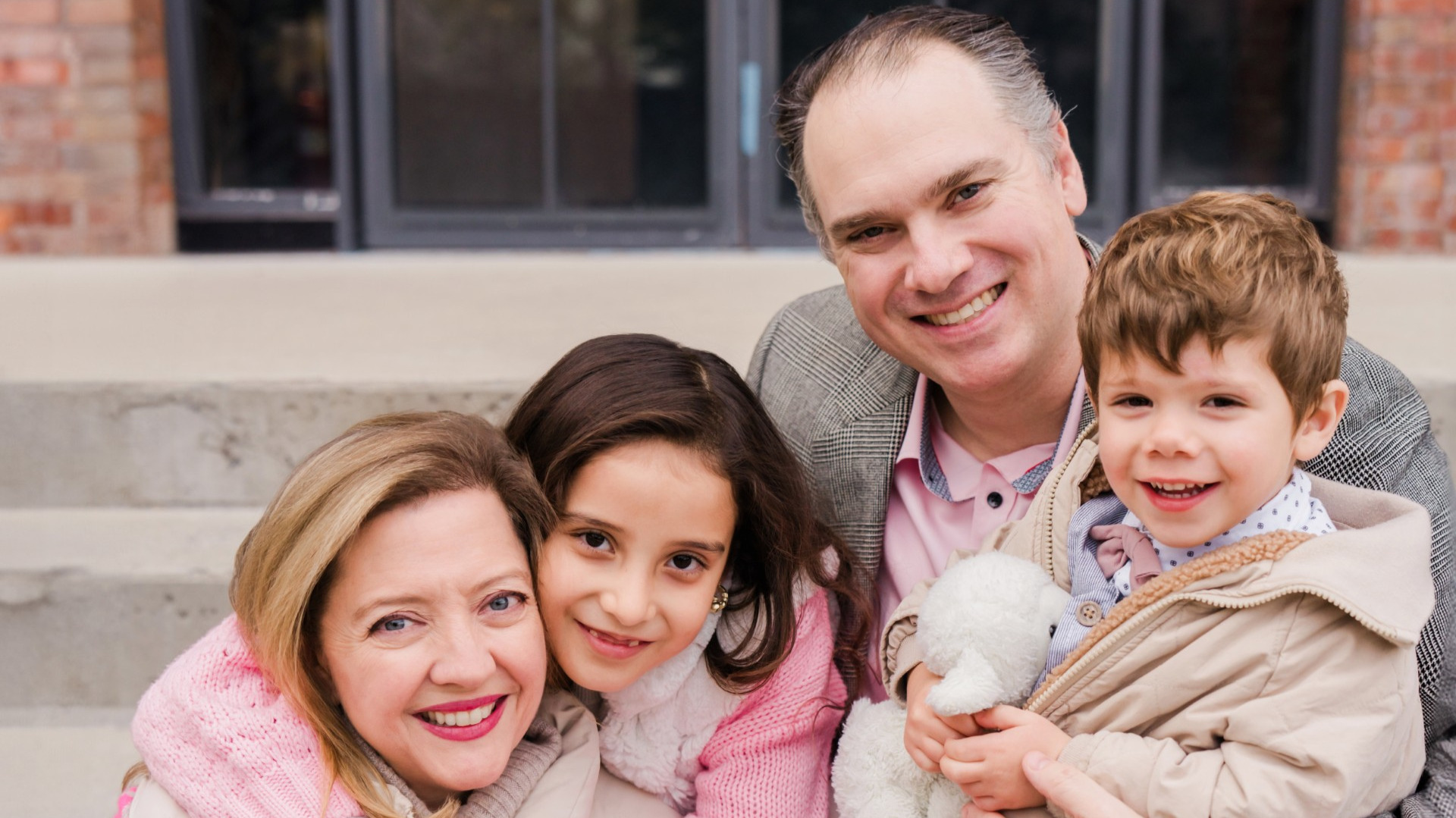
When Heartshare board member Liz Frank first pictured how she'd become a parent, the picture didn't quite resemble the life she has now, but she wouldn't change it for the world. After she and her husband, Chris, faced fertility struggles, the two explored adoption — international, then domestic — and found that the rules and timelines never quite fit their family. It was Chris who first said the words that changed everything: "Why don't we look into fostering?"
That single question reframed the whole journey. Instead of focusing on what they wanted, Liz and Chris shifted their mindset toward who they could help. "It really set us up well as a couple," Liz recalls. "That was the right mindset to go into it with."
Liz and Chris welcomed their daughter, Alina, into their home when she was just 10 weeks old — so new to the process that their home evaluation paperwork was finalized the same day Alina arrived. What followed were years that tested every ounce of patience, hope, and resilience the couple had: a court-approved phase where Alina was temporarily reunified with a biological parent, a period of no contact with Alina at all, and eventually Alina's return to their home. After five and a half long years, Alina’s adoption was finalized, and she was home with Liz and Chris for good.
Liz doesn't sugarcoat how hard that stretch was. She describes learning about grief "on the job" — not just in being a foster parent, but in the day-to-day reality of loving a child through uncertainty. She and Chris leaned hard on therapy, on each other, and on a close circle of friends and family who showed up for them, especially during a frightening health crisis for Chris that hit while their family was already experiencing so much.
Through it all, Liz kept coming back to a phrase she now shares with anyone considering fostering a child: you can't fill a hole with foster care. Fostering, she says, has to come from wanting to be in service to a child — not from trying to complete yourself. Healing your own grief, whatever brought you to the decision to become a foster parent, has to happen alongside the work of parenting.
Liz and Chris went on to foster and support other children and families along the way, including a newborn who was later joyfully reunited with her grandmother — an experience Liz describes as a strikingly different, hopeful counterpoint to the harder parts of her previous journey. Later, wanting a sibling for Alina, the family pursued open adoption for their son, building an ongoing relationship with his birth family that they maintain to this day.
Throughout her foster parent journey, Liz has always led with an open heart. In fact, it was the same spirit of open-hearted connection that led Liz to Heartshare in the first place. What set Heartshare apart, in Liz's eyes, was that the support didn't end when the paperwork did — the team stayed in her corner well beyond the point where their "job was done." That kind of follow-through said a lot about the people behind the organization, and it stuck with her. When she attended Heartshare's annual gala to show her gratitude, a conversation with Heartshare President and CEO Dawn Saffayeh turned into an invitation to join the Board. Liz said yes.
Since joining the Board, Liz has focused much of her energy on something close to her heart: recruiting more foster parents. It's not always easy — she's candid that spreading the word doesn't have a simple playbook — but she's found real traction by sharing her story directly, speaking with prospective foster parents in training sessions, and tapping her own network of friends and family to introduce them to Heartshare's mission.
One of her proudest moments happened at a small gathering she hosted in Brooklyn, where she introduced her community to Heartshare's work — and, with permission, shared her daughter's birth mother's own words about her experience. In that same room were scholars from Heartshare's educational coaching initiative for youth in foster care, the American Dream Program (ADP), practicing their networking skills and introducing themselves to guests.
Liz's advocacy for foster care doesn't stop with parent recruitment. She's especially energized by Heartshare's growing support for older youth — programs like ADP and Network 66, Heartshare’s alumni group for youth currently and formerly in care, that help young people leaving the foster system find community, housing, and mentorship long after they age out. She's built real relationships with young people in these programs, showing up not just as a board member, but as a steady, caring presence in their lives. She regularly meets up with ADP scholar and former Youth of the Year Cheyenne for breakfast — offering encouragement, book recommendations, and the kind of steady belief that reminds Cheyenne just how far she's come and how much further she can go.
Liz is honest about the fact that fostering is hard — full of uncertainty, heartbreak, and moments that can feel deeply unfair. But she also sees it as one of the most meaningful ways to show up for another person. Her advice to anyone weighing the decision: know your "why," take care of your own healing, build a strong support system, and be ready to be "all in."
"There are a lot of kids who need a lot of help," Liz says simply.
Liz’s story is a reminder that foster parenting rarely follows a straight line — and that showing up, again and again, is what makes the difference.
If Liz's journey resonates with you, or you're curious about what it means to become a resource for a child in your community, Heartshare would love to hear from you.